10 Best Activities for Newborns (0–3 Months)
The first three months feel impossibly fast and impossibly slow at the same time. Your baby sleeps most of the day — but those alert windows are developmental gold.
Newborns aren’t just eating and sleeping. They’re building visual pathways, calibrating their sense of hearing, forming their first emotional bond, and mapping their own body. Every calm, focused interaction you have with your baby in this window lays the neural groundwork for everything that comes next.
Here are 10 activities that actually work for 0–3 months — no toys required, no setup, just you and your baby.
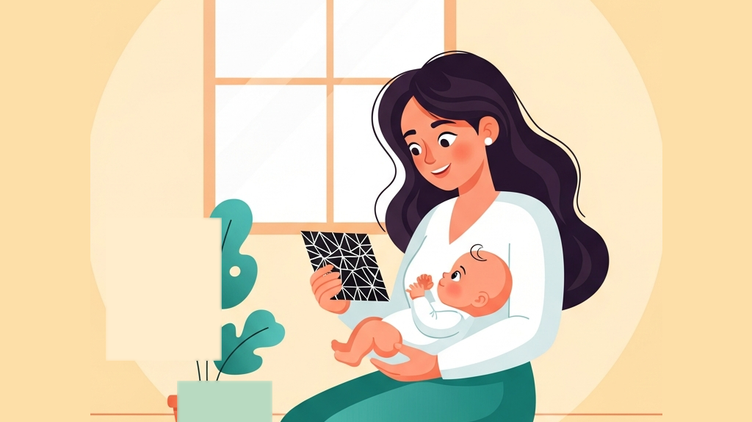
1. Black and White Face Cards
What it is: High-contrast black-and-white patterns held 20–30 cm from your baby’s face.
Why it works: Newborn eyes focus best at 20–30 cm — exactly face distance. Their visual cortex is wired to respond to sharp contrast, not pastels. Black and white patterns stimulate the visual neural pathways more effectively than anything colorful in the first weeks.
How to do it:
- Draw or print a simple face, spiral, or stripes on white paper with thick black lines.
- Hold the card 20–30 cm from your baby’s face while they’re on their back.
- Move the card slowly side to side — pause when their eyes track it.
- Stop after 5 minutes; newborns tire quickly.
What to watch for: Eyes that try to follow the card. Even a brief tracking moment is significant at this age.
2. Gentle Massage Routine
What it is: A 10-minute full-body massage using baby oil or unscented lotion.
Why it works: Baby massage lowers cortisol (the stress hormone) and raises oxytocin in both baby and parent. A consistent massage routine improves sleep quality and strengthens the parent-baby bond more measurably than almost any other single activity.
How to do it:
- Warm a small amount of baby oil in your palms.
- Start with the legs — long, gentle strokes from top to bottom.
- Move to arms, chest, and back in the same way.
- Pause if your baby fusses. Stay connected with eye contact and your voice.
Safety: Avoid abdominal massage if the umbilical cord hasn’t healed. Keep the room warm.
3. Sound Rattle Tracking
What it is: Gently shaking a soft rattle to one side of your baby’s head, then the other.
Why it works: Newborns are born with the ability to locate sounds — but that ability needs practice. Auditory tracking exercises the connections between the ears and the brain and builds the foundation for language processing.
How to do it:
- Hold a soft rattle or crinkle toy about 30 cm from your baby’s ear.
- Shake it gently, then wait. Watch for a head turn or eye movement toward the sound.
- Repeat on the other side.
- Keep sessions to 3–5 minutes.
4. Face Imitation Game
What it is: Sticking out your tongue, opening your mouth wide, or raising your eyebrows — and waiting for your baby to copy you.
Why it works: Newborns as young as 2–3 weeks can imitate simple facial expressions. This is one of the earliest signs of social cognition. The back-and-forth rhythm you build here is the prototype of every conversation they’ll ever have.
How to do it:
- Get your face close enough for your baby to focus (20–30 cm).
- Make a slow, exaggerated expression — tongue out, wide eyes, big smile.
- Hold it and wait. Give them 20–30 seconds to respond.
- When they make any expression back, mirror it immediately.
5. Mommy Scent Cloth
What it is: A small cloth that you’ve worn for a few hours, placed near (not on) your baby’s face during sleep or calm awake time.
Why it works: A newborn’s sense of smell is far more developed than their vision. They can identify their mother by scent within days of birth. Familiar scent activates the calm, secure nervous system response — reducing crying and improving sleep consolidation.
How to do it:
- Wear a small muslin cloth or piece of cotton against your skin for 2–3 hours.
- Place it 10–15 cm from your baby’s nose — not touching their face, never covering airways.
- Use during fussy periods or when settling to sleep.
Safety: Never place anything in the crib that could cover a baby’s face.
6. Tummy Time on Your Chest
What it is: Placing your baby tummy-down on your chest while you recline.
Why it works: Tummy time is the single most important physical activity of the first months. It builds the neck, shoulder, and core muscles that make rolling, sitting, and crawling possible. Chest tummy time is the easiest starting point because your warmth, heartbeat, and scent keep the baby calm enough to tolerate the position.
How to do it:
- Recline in a chair or on the sofa at a comfortable angle.
- Place your baby face-down on your chest, supporting their bottom.
- Talk or sing softly — your voice gives them a reason to lift their head.
- Start with 2–3 minutes and gradually extend.
Goal: By 3 months, most babies can hold their head up for 30–60 seconds during tummy time.
7. Whisper Songs
What it is: Singing or humming softly directly into your baby’s ear.
Why it works: The combination of your voice (familiar since the womb), physical closeness, and rhythmic sound activates the parasympathetic nervous system — the “rest and digest” mode. Whisper songs are particularly effective for babies who are overstimulated or having trouble settling.
Good choices: Simple repetitive melodies, lullabies, or even made-up nonsense sung in a low, even voice. The content matters less than the rhythm.
8. Mirror Hello
What it is: Holding your baby in front of a mirror and narrating what they see.
Why it works: Babies this age don’t yet recognize themselves — but they’re fascinated by faces, and the face in the mirror is always paying attention. Mirror play stimulates visual focus, tracking, and the early precursors of self-awareness.
How to do it:
- Hold your baby at mirror height, supporting their head.
- Point to their reflection: “That’s you! That’s your nose.”
- Make faces in the mirror together.
- Keep it to 3–5 minutes.
9. Balloon Eye Tracking
What it is: Moving a slowly inflated balloon across your baby’s visual field.
Why it works: Babies this age are wired to track moving objects. A balloon at 30–40 cm moves slowly enough for newborn eyes to follow, and its size makes it easier to track than a finger or rattle.
How to do it:
- Inflate a balloon loosely — not fully taut.
- Hold it 30–40 cm from your baby’s face.
- Move it slowly left to right, watching for eye tracking.
- Try vertical movement too — up and down tracking is harder and develops slightly later.
10. Skin-to-Skin Time
What it is: Holding your undressed baby against your bare chest.
Why it works: Skin-to-skin contact (kangaroo care) is one of the most studied interventions in infant development. It regulates body temperature, heart rate, and cortisol levels, and has measurable effects on weight gain, sleep consolidation, and immune function. It also has significant benefits for maternal mental health.
How to do it: No technique required. Just hold your baby against your chest with a blanket over both of you. 20–30 minutes per session is enough to see the benefits.
A note on reading your baby’s cues
At 0–3 months, the biggest skill isn’t doing the activities — it’s knowing when to stop.
Signs your baby is engaged and wants more:
- Eyes wide and bright
- Smooth arm and leg movements
- Turning toward you or the stimulus
Signs your baby needs a break:
- Looking away or arching back
- Hiccupping or yawning
- Fussing or crying
None of these activities should be pushed through fussing. A baby who’s forced to engage when they’re signaling overload doesn’t benefit — and may start to associate the activity with stress.
All 10 activities above are included in Muchi — each with step-by-step instructions, a pediatrician’s note, and a photo tip for capturing the moment. The app selects today’s activity based on your baby’s exact age in months, so you’re never guessing what’s developmentally appropriate.